China Best Expensive Designer Luggage Manufacturers?

Time:2026-09-15 Author:Henry
0%

China has become a serious sourcing destination for Expensive Designer Luggage, combining skilled production with increasingly refined design capabilities. Established manufacturers often work with aluminum alloys, full-grain leather, carbon fiber, and precision wheels. Their factories may include CNC machining rooms, stitching lines, testing laboratories, and dedicated quality-control teams. These details matter when luggage must survive airport handling, hotel transfers, and frequent business travel.

However, identifying the best manufacturer requires more than comparing glossy catalogs. A reliable supplier should provide material specifications, production samples, factory documentation, and clear inspection procedures. Buyers should examine wheel durability, handle stability, zipper performance, corner protection, and interior finishing. A suitcase can look impressive under studio lighting yet feel ordinary on a rough floor. That difference is important.

Experience also reveals a less comfortable truth. Not every premium-looking factory delivers consistent results across large orders. Sample quality may exceed mass-production quality. Therefore, independent inspections, written tolerances, and staged approvals remain practical safeguards. Certifications can support trust, but they should be verified rather than accepted at face value. Some manufacturers excel at custom development, while others perform better with stable, repeatable designs. The “best” choice depends on brand positioning, order volume, budget, and after-sales expectations. This guide examines leading Chinese manufacturers through those practical standards, with attention to craftsmanship, transparency, innovation, and long-term reliability. Mistakes still happen. Good sourcing systems reduce them.
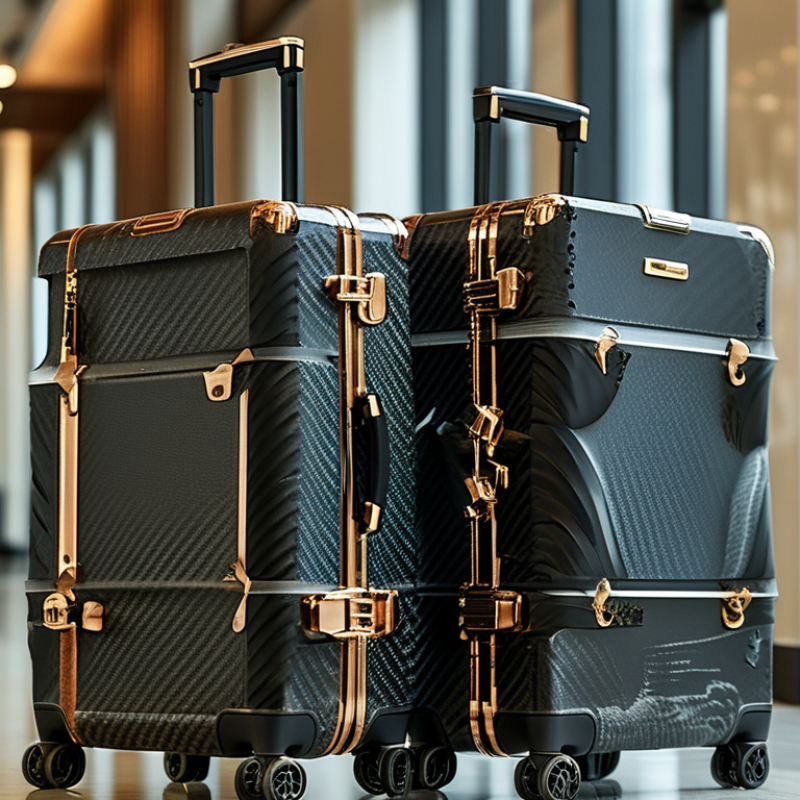
China Best Expensive Designer Luggage Manufacturers?

China’s Luxury Luggage Manufacturing Landscape

China’s Luxury Luggage Manufacturing Landscape

China remains a major production base for premium and luxury luggage. UN Comtrade data shows China is one of the world’s leading exporters of travel goods, measured by luggage and similar product categories. Statista Market Insights estimates the global luggage market generated over US$25 billion in 2024. This demand is pushing Chinese factories beyond low-cost production. Many now combine aluminum forming, molded polycarbonate, full-grain leather, and precision hardware in one supply chain.

The stronger manufacturers control details on the factory floor. Inspectors test wheel systems repeatedly, measure shell alignment, and check zipper resistance under load. Production teams also track stitching density, edge paint thickness, and handle movement. ISO 9001-based quality systems can improve traceability, but certification alone proves little. The weak point is consistency. A flawless sample may hide variation in the fiftieth unit. Luxury buyers should request batch records, material certificates, factory audit results, and independent testing. Bain & Company reported a slowdown in China’s personal luxury market during 2024, increasing pressure on suppliers to justify high prices through durability and service. Some factories still rely too heavily on visual polish. That is not enough. Long-term value depends on repair capacity, replacement-part planning, and honest communication about material limits. Experiences from sourcing projects suggest that smaller production runs can improve control, although they may raise unit costs and reveal unfinished processes.

China remains a major global production and export base for travel goods, supported by integrated material sourcing, large-scale manufacturing capacity, export logistics, and increasingly automated production. The chart uses HS 4202 export data as a trade proxy; this customs category includes luggage, handbags, cases, and other similar containers, so it is broader than luxury luggage alone.

Source: UN Comtrade, HS 4202, China exports; values shown in approximate current US$ billions.

Key Features of High-End Designer Luggage

China Best Expensive Designer Luggage Manufacturers?

Key Features of High-End Designer Luggage

High-end designer luggage begins with materials that feel substantial, not merely attractive. During sample inspections, I check whether the shell resists pressure without becoming brittle. Aluminum-magnesium alloys offer strength, while premium polycarbonate reduces weight and surface cracking. The finish should remain even around corners and handle openings. Small flaws matter.

A reliable case needs precise construction. Smooth wheels should roll quietly across tile, carpet, and uneven pavement. The telescopic handle must lock firmly at each height, without excessive movement. Reinforced stitching, protected zippers, and balanced compartments improve daily usability. Interior lining should resist tearing and allow easy cleaning. Water-resistant seals are useful, although they rarely make luggage completely waterproof.

Security features should support convenience rather than create frustration. A dependable combination lock, strong zipper tracks, and tamper-resistant construction deserve careful testing. Manufacturers with serious quality systems usually provide material specifications, inspection records, and clear warranty terms. I also look for spare wheels, handles, and practical repair support. These details reveal more than polished product photographs. Some expensive cases still feel awkward when fully packed. That weakness deserves honest attention. Weight distribution, wheel alignment, and handle comfort should be tested with real clothing, not empty samples. Ethical production and documented factory standards also strengthen buyer confidence.

Leading Chinese Manufacturers and Their Specialties

China’s premium luggage sector includes capable manufacturers in Guangdong, Zhejiang, Jiangsu, and Shanghai. Their specialties vary by production base and technical investment. Guangdong factories often handle complex OEM and ODM projects. They are experienced with aluminum frames, molded polycarbonate shells, and custom hardware. Zhejiang suppliers frequently focus on textile luggage, lightweight construction, and efficient large-volume production. Shanghai-based manufacturers may offer stronger design coordination and export documentation support.

During factory evaluations, I look beyond attractive samples. A reliable manufacturer should explain material grades, wheel testing, zipper durability, and handle-cycle results. Ask for production photos, inspection records, and sample approval procedures. Some factories use excellent outer materials but weaker internal frames. That detail is easy to miss. Manufacturing claims should be checked against measurable evidence, not polished presentations. A small defect in a corner protector can affect the entire premium impression.

Tips: Request a pilot order before full production. Test wheels on rough flooring. Check empty and loaded cases. Confirm logo placement, packaging, repair policies, and delivery tolerances in writing. Independent inspections add useful protection, although they cannot replace careful supplier communication. Also, leave room for revisions. My early sourcing reviews sometimes focused too heavily on appearance, while long-term reliability needed more attention.

Materials, Craftsmanship, and Customization Standards

China’s best expensive designer luggage manufacturers should be judged by materials, craftsmanship, and customization discipline. IATA’s 2024 baggage report recorded 6.9 mishandled bags per 1,000 passengers in 2023. That figure makes impact resistance more than a luxury detail.

Premium factories commonly work with full-grain leather, anodized aluminum, high-density polycarbonate, and recycled textiles. Textile Exchange reported global fiber production reached 124 million tonnes in 2023, while recycled polyester represented about 12% of polyester output. Material claims need verification. A supplier should provide fiber certificates, coating specifications, and batch records, not vague sustainability language.

Craftsmanship appears in small details. Even edge paint should remain smooth around corners. Stitch spacing should be consistent, and wheel mounts should feel firm without rattling. Custom production requires written tolerances for shell alignment, handle movement, zipper force, lining placement, and logo positioning. Salt-spray testing helps assess metal hardware, while repeated rolling and drop tests reveal hidden weaknesses. Many factories show attractive samples, yet mass production can drift. That gap deserves honest inspection.

A reliable manufacturer should document prototype approval, pre-production samples, and final inspections. ISO 9001 certification can support process control, but it does not guarantee refined design. Buyers should still request independent testing and inspect several production units. Customization is valuable only when measurements, materials, and quality limits are clearly recorded.

China Best Expensive Designer Luggage Manufacturers? - Materials, Craftsmanship, and Customization Standards

Evaluation Dimension Premium Standard Typical Materials or Process Recommended Verification Method Why It Matters
Outer Shell Consistent wall thickness, clean molding, and resistance to cracking under normal travel conditions Polycarbonate, aluminum alloy, or high-strength nylon composite Review material certificates, wall-thickness records, impact testing, and sample inspection The shell protects contents and strongly affects weight, durability, and appearance
Aluminum Construction Uniform panels, accurately aligned corners, and secure riveted or mechanically fastened joints Aluminum-magnesium alloy panels, anodized or coated surfaces, reinforced corners Check alloy documentation, corner alignment, surface finish, and repeated-opening tests Aluminum provides a rigid premium feel but is usually heavier and may show dents
Polycarbonate Construction Even molding, stable color, and no visible stress marks around corners or handle mounts Virgin polycarbonate, textured or gloss-coated finishes, molded reinforcement zones Request resin specifications, UV-aging results, impact testing, and color consistency checks Polycarbonate offers a favorable balance of low weight, impact resistance, and design flexibility
Interior Lining Straight seams, reinforced stress points, smooth zippers, and removable or serviceable panels Polyester or nylon textile lining, foam padding, mesh dividers, leather or synthetic trim Inspect seam density, zipper movement, tensile strength, colorfastness, and odor control Interior construction protects garments and determines organization and long-term usability
Wheels and Casters Smooth 360-degree rotation, balanced rolling, secure mounting, and low operating noise Replaceable dual-spinner or single-spinner wheels using polyurethane or comparable elastomers Perform rolling tests on multiple surfaces, wheel-load tests, and pull-force measurement Wheel quality affects maneuverability, noise, repairability, and perceived luxury
Telescopic Handle Minimal side-to-side movement, smooth locking, ergonomic grip, and reinforced attachment points Aluminum or steel tubes, engineered polymer grip, multi-stage locking mechanism Check extension-cycle testing, lock strength, tube straightness, and handle-load performance A stable handle improves control and reduces damage caused by uneven pulling forces
Zippers and Closures Consistent tooth engagement, reinforced ends, smooth travel, and reliable lock compatibility Coil or molded-tooth zippers, metal or engineered-polymer pulls, combination locks Conduct opening-cycle tests, pull tests, water-resistance checks, and lock-function inspection Closures are frequent failure points and influence security and weather resistance
Leather and Trim Even grain, consistent dye, clean edge finishing, and accurate stitching around curves Full-grain or corrected-grain leather, vegetable-tanned or chrome-tanned components, microfiber alternatives Verify leather classification, thickness, abrasion resistance, colorfastness, and restricted-substance compliance Trim quality creates visual distinction and must withstand repeated handling
Craftsmanship and Assembly Tight tolerances, symmetrical panels, clean stitching, protected edges, and documented quality checkpoints Computer-controlled cutting and molding combined with skilled hand assembly and finishing Use approved samples, first-article inspection, in-line inspection, and final AQL sampling Consistent assembly reduces defects and supports repeat production
Customization Capability Controlled customization of dimensions, colors, hardware, lining, logos, packaging, and accessory sets Color-matched plastics, anodized metal, custom molds, laser engraving, embroidery, or embossing Request a technical specification sheet, color standards, prototype approval, and change-control records A formal customization process protects design accuracy and production consistency
Testing and Compliance Documented testing for durability, chemicals, restricted substances, labeling, and packaging safety Quality-management procedures aligned with applicable ISO, REACH, RoHS, or destination-market requirements Review current third-party reports, factory quality records, and destination-specific compliance documents Compliance lowers regulatory, safety, and import risks
Repairability and After-Sales Support Availability of replacement wheels, handles, locks, shells, and interior parts with documented service procedures Modular components, spare-part inventory, repair manuals, and warranty process Confirm spare-part lead times, warranty terms, repair rates, and service responsibilities in writing Repair support extends product life and reduces total ownership cost

Note: Premium performance should be confirmed through current samples, test reports, technical specifications, and independent inspection rather than appearance or price alone.

How to Evaluate China’s Premium Luggage Manufacturers

Choosing China’s premium luggage manufacturers requires more than inspecting glossy samples. According to Grand View Research’s 2024 luggage market report, the global market was valued at approximately USD 20 billion in 2023. Premium buyers now expect lighter shells, stronger wheels, repairable parts, and consistent finishing. A serious factory should explain its material grades, mold ownership, production capacity, and inspection process clearly. Ask for recent quality records, not only attractive showroom photos. ISO 9001 certification helps, but it does not replace product testing.

My evaluation process starts with a factory visit or a verified video audit. I inspect stitching, zipper alignment, corner protection, handle movement, and wheel noise. ASTM and ISO testing methods can assess impact resistance, load strength, abrasion, and rolling durability. The 2024 Travel Goods Association industry outlook also highlights continuing demand for durable, lightweight travel products. However, durability claims often sound stronger than the evidence. I once accepted a perfect prototype too quickly. That was a mistake. Mass production revealed uneven gaps and weaker handle springs.

Tips: Request three production samples from different batches. Weigh each case. Compare shell thickness, wheel clearance, and interior seam quality. Ask for a written defect tolerance and replacement policy. Confirm whether testing occurs in-house or through an independent laboratory. Review export experience carefully, while avoiding vague claims such as “top quality.” A reliable manufacturer welcomes difficult questions and provides measurable answers. Small inconsistencies matter. Premium luggage is judged repeatedly, not once.

FAQS

What materials are suitable for high-end designer luggage?

Aluminum-magnesium alloys provide strong protection. Premium polycarbonate keeps weight lower and reduces surface cracking. Check corners and handle openings for uneven finishes.

How can I test a luggage shell?

Press the shell gently and inspect its recovery. It should resist pressure without feeling brittle. Small surface flaws matter more than expected.

What makes luggage wheels reliable?

Wheels should roll quietly across tile, carpet, and uneven pavement. Test them with clothing inside. Empty cases can hide poor balance.

How should I evaluate the telescopic handle?

Pull the handle through every height setting. Each position should lock firmly. Excessive movement usually signals weak construction.

Which security features are useful?

Look for a dependable combination lock and strong zipper tracks. Tamper-resistant construction should not make packing difficult. Convenience still matters.

Is water-resistant luggage completely waterproof?

Usually, no. Water-resistant seals help during light rain or spills. They cannot guarantee protection during heavy or prolonged water exposure.

What should I request from a luggage manufacturer?

Request material specifications, inspection records, and warranty terms. Ask for wheel tests and handle-cycle results. Polished photographs are not enough.

Why should I place a pilot order?

A pilot order reveals defects before full production. Test loaded cases on rough flooring. Confirm logo placement, packaging, repairs, and delivery tolerances in writing.

What details are often overlooked during inspections?

Inspect internal frames, stitching, zippers, and lining resistance. Check whether the lining cleans easily. Some attractive cases feel awkward when fully packed.

What makes a luggage supplier dependable?

Dependable suppliers explain measurable production results clearly. They support spare wheels, handles, and repairs. I once focused too much on appearance; reliability deserved more attention.

Conclusion

China’s luxury luggage manufacturing landscape has evolved from large-scale production toward refined, design-driven craftsmanship. Today, premium factories serve clients seeking Expensive Designer Luggage with a strong balance of elegance, durability, and functional performance. High-end products typically feature lightweight structures, precise wheels, secure hardware, spacious interiors, and carefully finished surfaces. Manufacturers may specialize in hard-shell cases, soft-sided luggage, travel trunks, business collections, or personalized projects, allowing buyers to select solutions suited to different markets and customer preferences.

Materials and craftsmanship are central to premium quality. Options may include aerospace-grade metals, impact-resistant shells, premium fabrics, vegetable-tanned leather, and customized lining systems. Reliable manufacturers should demonstrate consistent stitching, accurate assembly, smooth movement, strict quality control, and flexible customization capabilities. When evaluating suppliers, buyers should review production experience, sample quality, material certifications, testing procedures, communication efficiency, order flexibility, and after-sales support. A careful comparison of these factors can help identify a dependable Chinese manufacturing partner for sophisticated luggage collections.


Henry

Henry

Henry is a dedicated marketing professional with a profound expertise in the company's offerings. With years of experience in the industry, he possesses an impressive understanding of the market dynamics and consumer behaviors that drive success. Henry is committed to sharing his insights through......