An Expensive Luggage Bag can be more than a polished shell and a famous logo. For global buyers, its real value shows up in crowded terminals, uneven pavements, and years of repeated trips. Materials, wheel performance, repair access, and warranty terms matter. So does the way a case fits different travel habits. Price alone tells only part of the story.
Allied Market Research estimated the global luggage market at $22.4 billion in 2021 and projected $36.6 billion by 2031, with a 5.1% compound annual growth rate. This broad market includes luggage at many price levels; it is not a luxury-only measure. Still, it offers useful context: buyers face a wide and growing range of choices. In the premium segment, small details become practical tests. Does the handle wobble when fully packed? Can a damaged wheel be replaced? Is the interior easy to clean? These questions are less glamorous. They are often more revealing.
LVMH chairman Bernard Arnault once said, “Luxury is the only area in which it is possible to make luxury margins.” His remark concerns luxury economics, not suitcase quality. That distinction matters. An expensive label does not guarantee a better travel experience. This guide compares leading high-end bags through design, materials, usability, and after-sales support, while noting where evidence is limited. Some judgments remain subjective. That is worth admitting. Global buyers should weigh local service availability, baggage size, and personal travel patterns before paying a premium. A beautiful case still has to work.
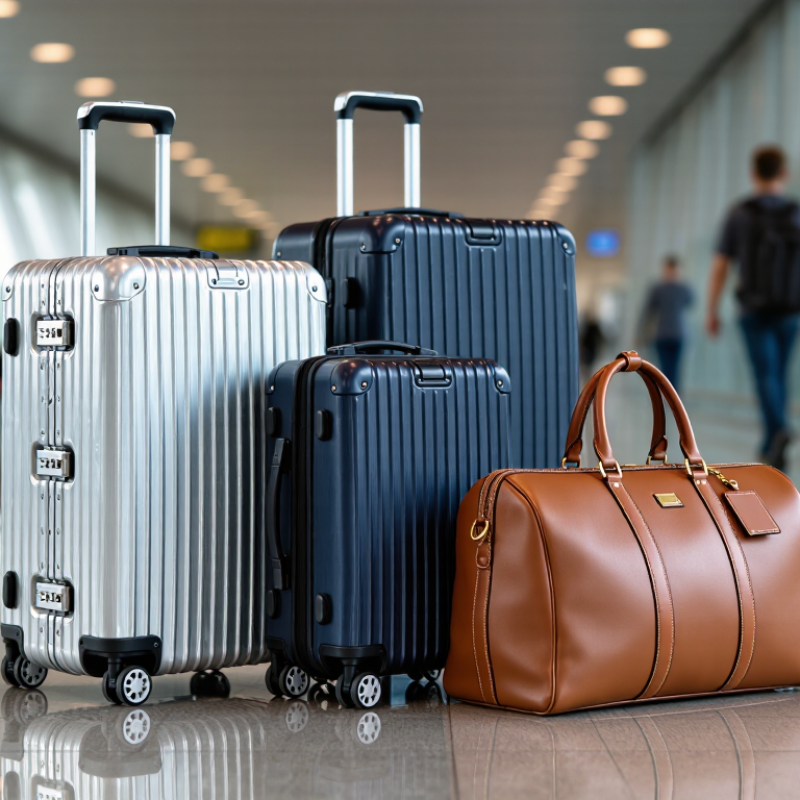
What Makes a Luggage Bag Expensive?
An expensive luggage bag usually begins with materials chosen for repeated travel, not showroom appearance. High-grade polycarbonate can resist impact while staying relatively light. Full-grain leather may develop character, but it often adds weight and needs regular conditioning. The difference is noticeable in the hand. Cheap fabric can feel thin around corners, where abrasion starts first.
Construction also raises the price. Strong luggage uses reinforced stitching, sealed seams, and hardware that operates smoothly after thousands of movements. Wheels should roll quietly across uneven airport flooring. Telescopic handles need minimal side-to-side movement. I look closely at these details because a polished exterior can hide weak internal brackets. That mistake is common.
Testing and repair support matter as much as materials. Reliable manufacturers test zippers, wheel assemblies, handles, and shell strength under repeated stress. Replaceable wheels or handles can extend a bag’s useful life and reduce waste. Precise fitting often requires slower production, skilled labor, and tighter quality checks. That cost reaches the buyer. Still, a high price is not automatic proof of quality. Some bags charge for styling more than performance. I have also found that extra compartments can create unnecessary bulk. The trade-off is real. A truly valuable luggage bag balances protection, weight, handling, and repairability for the traveler’s actual needs.
Materials and Craftsmanship Behind Premium Luggage
Premium luggage earns its price through material choices and the details that survive repeated handling. A polycarbonate shell can flex under impact, while an aluminum frame adds rigidity but also weight. Woven luggage depends on fabric density, seam construction, and coatings that resist moisture and abrasion. Textile Exchange’s 2024 Materials Market Report estimates global fiber production reached 124 million tonnes in 2023, with polyester making up 57 percent. That scale matters: buyers should ask what a fabric is made from, and how its quality is tested. A material label alone tells little.
Look closely at the corners, wheel mounts, zipper tracks, and handle joints. These areas take concentrated stress. Even stitching. On a well-finished case, seams sit straight, edges feel smooth, and telescoping handles move without a sharp rattle. Replaceable wheels and handles may also make repairs more practical, though availability varies by maker. A glossy shell can look reassuring, but appearance does not prove impact resistance. ASTM abrasion methods can help assess surface wear, yet they do not predict every journey or careless baggage drop. I would compare test details, warranty terms, and repair access rather than trust price as a shortcut. Premium craft is visible in small decisions, but no case is indestructible.
Notable High-End Luggage Brands and Models
High-end luggage is best compared by construction and use, not status alone. Notable categories include lightweight aluminum cases, molded polycarbonate spinners, and soft-sided business cases. Aluminum models offer rigid shells, flush latches, and a crisp finish, but rough handling can dent their corners. Polycarbonate cases flex under pressure and usually weigh less, making them practical for frequent transfers. Business cases prioritize organized pockets, laptop sleeves, and quiet wheels over maximum capacity. Small details matter.
An expensive model should justify its price through repair access, wheel replacement, handle stability, and warranty clarity. Allied Market Research valued the luggage sector at about $38.8 billion in 2022. The report forecast $64.1 billion by 2032, with a 5.2% compound annual growth rate. That growth signals broad demand, not proof that premium products perform better. Check shell thickness, zipper stitching, and wheel wobble in person; test the handle with a loaded case if possible. A polished showroom floor hides rattles. Still, looks can mislead. For global buyers, confirm dimensions and empty weight against intended airlines, since cabin limits differ. Even careful testing has limits: long-term repair coverage can matter more than a smooth first roll.
Top Expensive Luggage Bags for Global Buyers - Notable High-End Luggage Brands and Models
| Anonymous Product Profile |
Approx. U.S. Retail Price |
Main Material |
Dimensions (H × W × D) |
Approx. Weight |
Notable Features |
| Aluminum Cabin Case A |
US$1,500–$1,600 |
Anodized aluminum shell |
21.7 × 15.8 × 9.1 in
(55 × 40 × 23 cm) |
8.6 lb
(3.9 kg) |
Four multi-directional wheels, telescopic handle, and integrated lock system. |
| Aluminum Cabin Case B |
US$1,400–$1,550 |
Aluminum shell with protective corner detailing |
22 × 14 × 9 in
(56 × 36 × 23 cm) |
11.5 lb
(5.2 kg) |
Structured interior with compression panels and spinner wheels; check airline cabin limits before travel. |
| Heritage Fiberboard Carry-On |
US$2,000–$2,300 |
Vulcanized fiberboard with leather trim |
21.7 × 15.7 × 8.3 in
(55 × 40 × 21 cm) |
About 9.9 lb
(4.5 kg) |
Traditional frame construction, leather corners, and a distinctive heritage-style exterior. |
| Coated-Canvas Cabin Spinner |
US$3,500–$4,000 |
Coated canvas with reinforced trim |
21.7 × 15.4 × 7.9 in
(55 × 39 × 20 cm) |
About 7.7 lb
(3.5 kg) |
Lightweight hard-sided construction, four wheels, and a cabin-size format. |
| Italian-Style Cabin Spinner |
US$1,000–$1,300 |
Polycarbonate shell with leather accents |
21.7 × 14.2 × 9.8 in
(55 × 36 × 25 cm) |
About 8.4 lb
(3.8 kg) |
Hard-shell body, spinner wheels, and a polished design suited to short trips. |
| Buyer note: Product profiles are anonymized. Prices are approximate U.S. retail ranges and may change by market, season, and configuration. Dimensions and weights are representative published specifications; confirm the current listing and airline baggage rules before purchase. |
How Luxury Luggage Prices Vary Across Global Markets
Luxury luggage prices can differ sharply across global markets. A case priced at 3,000 dollars in one country may cost 3,600 elsewhere. Import duties, local taxes, currency movements, and shipping charges create much of this gap. Regional demand also matters. In major travel hubs, limited colors and seasonal collections may command higher prices. In less competitive markets, authorized retailers may offer better value through promotions or bundled services.
Materials influence pricing, but they do not explain everything. Lightweight aluminum, reinforced corners, hand-finished leather, and silent wheels increase production costs. A suitcase with precise stitching and replaceable parts may deliver stronger long-term value. However, some buyers pay mainly for presentation. That can make price comparisons difficult. Check the interior frame, wheel construction, warranty terms, and repair access before judging the label on the price tag. Small details matter.
A careful comparison should use the same model, size, currency, and tax conditions. Online prices can look attractive until delivery fees appear at checkout. Exchange rates may change before payment. My own market comparisons are not perfect, especially when service packages differ. Still, recording prices from official retailers and checking return policies creates a more reliable picture. A lower purchase price may become expensive if repairs require international shipping. Sometimes, paying more locally buys faster support. Sometimes, it does not.
Factors Global Buyers Consider When Choosing Expensive Luggage
Top Expensive Luggage Bags for Global Buyers
Global buyers judge expensive luggage by performance, not only appearance. I used to equate heavy construction with strength. That assumption was often wrong. A lighter case can reduce handling strain and help travelers meet airline weight limits. Buyers should inspect wheel stability, handle flex, zipper protection, shell recovery, and interior compression. SITA’s 2024 Baggage IT Insights reported 6.9 mishandled bags per 1,000 passengers in 2023. This figure makes impact resistance and reliable identification features practical concerns.
Tips: Roll the case across uneven flooring before purchase. Test the handle at several heights. Check whether replacement wheels and handles are available internationally. Read the warranty’s repair terms carefully, especially for transit damage. A polished guarantee may still exclude common failures.
Material choice also requires judgment. Aluminum can offer strong impact resistance, but it may dent and add weight. Polycarbonate often provides better flexibility, yet quality varies between constructions. Four-wheel systems feel convenient on smooth airport floors, but larger wheels can suffer on rough streets. Experienced buyers should compare empty-case weight, usable capacity, lock design, and repair access. Independent testing matters more than showroom confidence. Industry forecasts can show market growth, but they cannot predict one traveler’s abuse pattern. Choose according to routes, climate, storage habits, and expected repair support.
Conclusion
An Expensive Luggage Bag is defined not only by its price, but also by the quality of its materials, precision craftsmanship, durability, and thoughtful design. Premium luggage may use advanced lightweight shells, full-grain leather, reinforced fabric, smooth wheels, secure handles, and carefully engineered interiors. Skilled construction, strict quality control, elegant finishing, and long-term reliability all contribute to its value. High-end models often combine practical performance with refined appearance, offering travelers greater comfort, organization, and confidence during frequent journeys.
Prices can vary across global markets because of taxes, import costs, currency exchange rates, local demand, distribution expenses, and regional purchasing power. When selecting an expensive suitcase, global buyers commonly compare durability, weight, storage capacity, security features, warranty coverage, repair support, and overall design. They also consider travel frequency, transportation conditions, personal style, and whether the product offers lasting value rather than temporary prestige. A well-chosen luxury luggage bag should balance craftsmanship, functionality, service, and dependable performance.

 Da Bai Luxury