High End Designer Luggage represents more than an expensive suitcase. It combines skilled construction, recognizable design, carefully selected materials, and dependable performance. A well-made case should move smoothly through airport corridors, fit securely into practical storage spaces, and protect clothing without unnecessary weight. Its value appears in small details: reinforced corners, balanced handles, quiet wheels, precise stitching, and a lining that remains clean after repeated journeys.
Dieter Morszeck, former CEO of RIMOWA and a leading figure in premium luggage, once described the brand’s purpose this way: “We are not in the luggage business; we are in the mobility business.” This idea helps explain why High End Designer Luggage deserves closer examination. Luxury is not simply a logo or polished surface. It may involve years of material testing, skilled assembly, repair access, and a design that remains useful after fashion changes. Still, no suitcase is perfect. Aluminum can scratch. Leather can mark. Fine hardware can add weight. That matters.
Choosing well requires honest comparison. Examine the wheel movement on uneven flooring. Test the handle for looseness. Check the warranty, repair network, dimensions, and interior organization. A beautiful suitcase that becomes difficult to lift may disappoint during a crowded transfer. The strongest designs balance appearance with experience, authority with practicality, and exclusivity with long-term reliability. This guide explores what truly defines High End Designer Luggage, while questioning whether higher prices always deliver better travel.
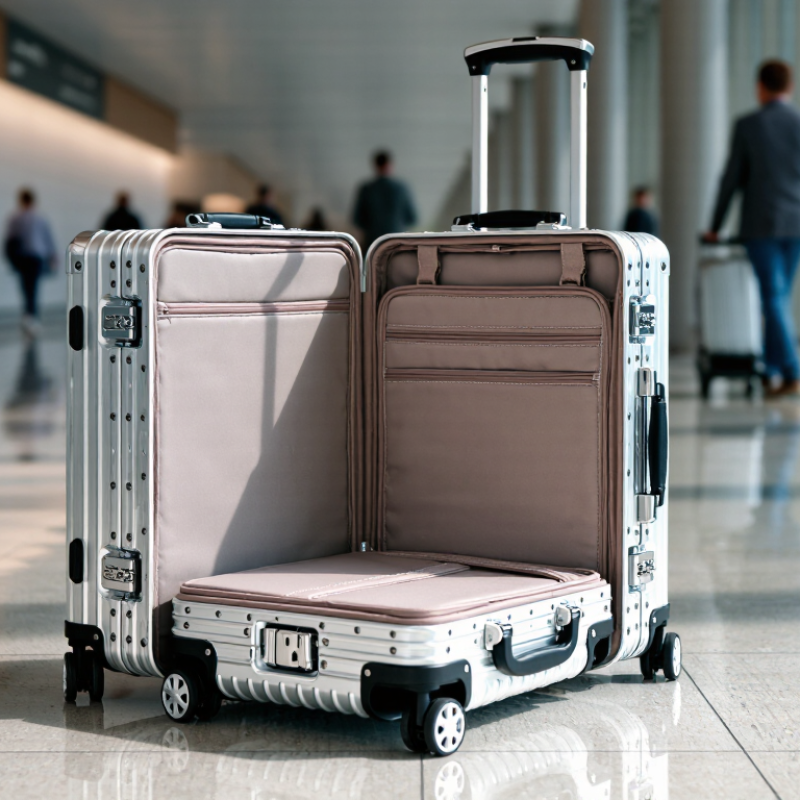
What Is High End Designer Luggage?
Definition and Core Characteristics of High-End Designer Luggage
High-end designer luggage combines refined design, advanced construction, and dependable travel performance. It is not simply expensive luggage. Its value depends on material quality, skilled assembly, functional testing, and long-term service. Bain & Company reported that the global personal luxury goods market reached approximately €362 billion in 2023. This growth reflects stronger demand for products offering identity, quality, and lasting use.
Materials provide the first visible distinction. Full-grain leather, aerospace-grade aluminum, and impact-resistant polycarbonate can improve durability when properly engineered. However, material names alone prove little. A well-designed case should protect corners, roll smoothly, resist moisture, and remain stable on uneven flooring. High-end details may include reinforced stitching, balanced handles, quiet wheels, and precisely fitted closures. Small details matter.
Craftsmanship also includes repair access and production transparency. The Responsible Business Alliance highlights traceability and responsible supply practices as important manufacturing standards. Buyers should examine care instructions, warranty terms, and replacement-part availability before purchasing. The Global Luggage Market report by Grand View Research projects continued market growth through 2030, supported by international travel and premium product demand. Still, market growth does not guarantee better products. Price can impress briefly. Real quality appears after repeated journeys, crowded terminals, and a damaged wheel. Even experts can overvalue appearance. Practical testing remains essential.
High-end designer luggage begins with materials chosen for performance, not appearance alone. Full-grain leather may develop attractive marks, while aerospace-grade aluminum resists crushing but can show dents. High-density polycarbonate offers lighter protection and controlled flexibility. The material should match the traveler’s habits, climate, and packing needs.
Craftsmanship appears in small details. During hands-on inspections, I look at edge painting, seam consistency, and how smoothly the handle locks. A well-made telescopic handle should move without scraping or sideways play. Wheels should roll quietly across tile, carpet, and uneven pavement. Zippers need firm teeth and clean alignment. Tiny gaps can reveal rushed assembly.
Construction standards matter beyond a polished shell. Reinforced corners, balanced weight distribution, and replaceable components improve long-term reliability. Interior panels should stay taut, with stitching that does not catch clothing. Hardware should resist corrosion after repeated exposure to moisture. Still, no suitcase is indestructible. Even excellent luggage can suffer from overpacking, careless handling, or a hard airport impact. I sometimes value repairable design more than flawless finishing, though that preference is difficult to judge before years of use. A beautiful case that cannot be serviced may become expensive decoration. Real quality is often quiet.
High end designer luggage combines recognizable design with serious travel performance. Its signature design may appear through a distinctive silhouette, precise stitching, or a carefully balanced color palette. These details create visual identity without making the case look excessive. In my experience, the best designs remain attractive after repeated airport handling. A beautiful surface means little if it quickly shows damage.
Branding should feel intentional, not loud. Subtle emblems, custom hardware, and consistent interior details can communicate quality. Good branding also builds trust through clear material information, reliable customer support, and realistic care instructions. A polished logo cannot replace honest construction. That distinction matters.
Functional innovation gives luxury luggage its practical value. Smooth wheels should move quietly across stone floors and uneven sidewalks. Handles need firm locking points and comfortable grip surfaces. Compartments should hold clothing, devices, and small essentials without wasting space. Lightweight materials can improve mobility, but extreme lightness may reduce durability. This is where judgment becomes difficult. I have tested cases that felt impressively light, yet their thin shells seemed less reassuring after several journeys.
Useful innovation can also include replaceable wheels, reinforced corners, moisture-resistant linings, and secure compression systems. These features support longer use and reduce unnecessary replacement. Still, no suitcase is perfect. Travelers should examine balance, access, repair options, and real carrying comfort before focusing on appearance. High end luggage earns its value when signature design, credible branding, and functional engineering work together during ordinary travel.
High End Designer Luggage: Price Factors, Quality Assessment, and Consumer Expectations
High end designer luggage is judged by more than its price tag. In my experience, expensive luggage should feel balanced, not merely heavy. Full-grain leather, high-density polycarbonate, reinforced corners, and smooth wheels often raise production costs. Skilled stitching also matters. Uneven seams can reveal rushed workmanship. A strong handle should extend without shaking or catching. Still, premium materials do not guarantee perfect performance. Some attractive cases scratch easily or feel awkward in crowded terminals.
Price also reflects design development, limited production, quality control, repair support, and presentation. Consumers often expect quiet wheels, secure closures, practical interiors, and lasting finishes. Those expectations are reasonable, but personal travel habits change the assessment. A frequent business traveler may value light weight and laptop protection. A long-distance traveler may prefer stronger frames and replaceable parts. I would inspect the zipper, wheel alignment, handle stability, and interior lining before trusting promotional language. Small defects deserve attention.
Tips: Compare weight with capacity. Test every moving part. Check the warranty terms and repair process. Photograph the case before travel. Do not assume the most expensive option is the most durable. A careful buyer should also consider whether the design remains useful after the first season.
High-end luggage is typically priced above the mainstream market because of premium materials, stronger construction, refined interiors, repair support, and design value. The benchmark below shows the approximate share of a product’s price commonly associated with major value factors.
The percentages represent an editorial pricing model for evaluating high-end luggage rather than a brand-specific price list. Material and construction quality usually have the greatest influence, while design, finishing, and after-sales service shape the premium consumers are willing to pay.
High-end designer luggage combines refined materials, precise construction, and practical travel engineering. It is not simply expensive baggage. A strong case should roll smoothly, protect clothing, and survive airport handling. Common categories include hard-shell suitcases, soft-sided cases, carry-on bags, garment carriers, duffels, and compact travel accessories. Each serves a different journey.
Carry-on luggage suits short trips and frequent flyers. Its smaller frame fits overhead compartments, although airline limits differ. Checked luggage offers greater capacity for long holidays, winter clothing, or equipment.
Garment carriers help business travelers reduce wrinkles. A structured duffel works well for weekend travel, gym visits, and flexible packing. Many travelers still choose appearance over weight. That choice deserves reconsideration.
Travel demand supports these distinctions. The International Air Transport Association forecast 4.96 billion air travelers in 2024, creating continued demand for reliable personal luggage. The 2024 Business Travel Index from the Global Business Travel Association projected global business travel spending at about 1.48 trillion dollars. This helps explain the popularity of slim carry-ons and garment-friendly designs.
Meanwhile, premium luggage buyers often inspect wheel systems, handle strength, lining quality, and repair access. I have found that these details matter more than decorative hardware. A beautiful case can still disappoint after one crowded connection.
Durability testing and clear warranty terms remain essential evidence of quality.
High-end luggage combines strong materials, careful assembly, useful features, and dependable travel performance. Price alone proves very little. Real quality appears after repeated trips, crowded terminals, and damaged wheels.
Common materials include full-grain leather, aerospace-grade aluminum, and impact-resistant polycarbonate. Leather can develop attractive marks over time. Aluminum resists crushing but may show dents. Polycarbonate offers lighter protection and controlled flexibility.
Check seam consistency, edge finishing, handle movement, wheel noise, and zipper alignment. The handle should lock smoothly without sideways movement. Wheels should roll across tile, carpet, and uneven pavement. Tiny gaps may suggest rushed assembly.
Neither option is always better. Hard shells can protect contents from crushing and moisture. Soft-sided cases often provide flexible packing and exterior pockets. Your climate, packing style, and travel length should guide the choice.
A compact carry-on usually suits short trips and frequent flights. A garment carrier can reduce wrinkles in jackets and shirts. Airline size limits differ, so measure the case before departure. Small details matter.
Check weight, capacity, corner protection, wheel strength, and handle balance. Replaceable wheels and clear warranty terms are valuable. A large case may hold more, but overpacking can damage its frame.
Replaceable wheels, handles, and closures can extend a suitcase’s useful life. Repair access may matter more than perfect finishing. A beautiful case without service support can become expensive decoration.
No. Even excellent luggage can suffer from overpacking, moisture, rough handling, or hard impacts. I sometimes trust repairable construction more than appearance. Still, long-term durability is difficult to judge before years of use.
High End Designer Luggage represents the highest level of travel bags, combining refined appearance, durable performance, and carefully considered details. It is typically made from premium materials such as strong leather, advanced textiles, lightweight metal, or impact-resistant shells. Skilled construction, precise stitching, reinforced corners, dependable wheels, and secure hardware help ensure long-term reliability. Its value is not based on appearance alone, but also on the consistency of its craftsmanship and the quality of its finishing.
A distinctive visual identity, thoughtful organization, and functional innovation further define High End Designer Luggage. Features may include adaptable compartments, ergonomic handles, smooth mobility, protective interiors, and practical security solutions. Prices are influenced by material quality, production techniques, design complexity, durability, and overall usability, while consumers generally expect comfort, resilience, exclusivity, and dependable service. Common categories include carry-on cases, checked luggage, garment carriers, weekend bags, backpacks, and coordinated travel accessories, each suited to different journeys and packing needs.

Da Bai Luxury